
U.S.-Iran Tensions: Ceasefire Holds as Doha Talks Remain Unclear
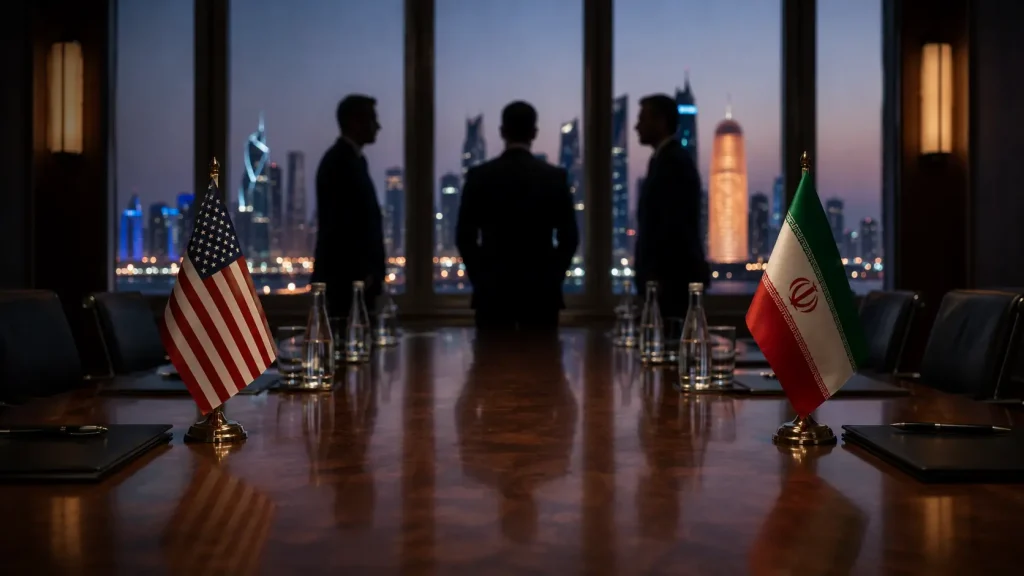
The fragile ceasefire between the United States and Iran remains in place, but uncertainty is growing over the next step in diplomatic efforts as both sides offer conflicting accounts of possible talks in Doha.
Washington says senior U.S. envoys are expected to travel to Qatar for Iran-related discussions aimed at reducing tensions and preserving the current pause in hostilities. U.S. officials have presented the Doha track as a possible opening for de-escalation after weeks of military pressure and regional instability.
Tehran, however, has pushed back against claims of direct negotiations with the United States. Iranian officials say no bilateral talks with Washington have been scheduled, leaving the diplomatic process surrounded by uncertainty.
The dispute comes at a sensitive moment for the Middle East. The Strait of Hormuz, one of the world’s most important oil and gas transit routes, remains central to the standoff. Any renewed escalation between the U.S. and Iran could affect energy markets, shipping routes and wider regional security.
For now, both sides appear to be avoiding a direct return to open confrontation. But the lack of a clear diplomatic framework shows that the ceasefire remains fragile rather than stable.
Analysts say the coming days will be critical. If mediators in Qatar can keep communication channels open, the ceasefire may gain time. If not, conflicting statements from Washington and Tehran could deepen mistrust and increase the risk of another escalation.
The U.S.-Iran crisis remains one of the most closely watched global developments, with governments, energy markets and regional actors waiting to see whether Doha becomes a real diplomatic channel or another sign of a deadlocked process.
Sources
Reuters — U.S. says Trump envoys Kushner and Witkoff will travel for Iran meeting in Doha
The Guardian — Trump claims Iran has agreed to hold peace talks in Doha
