

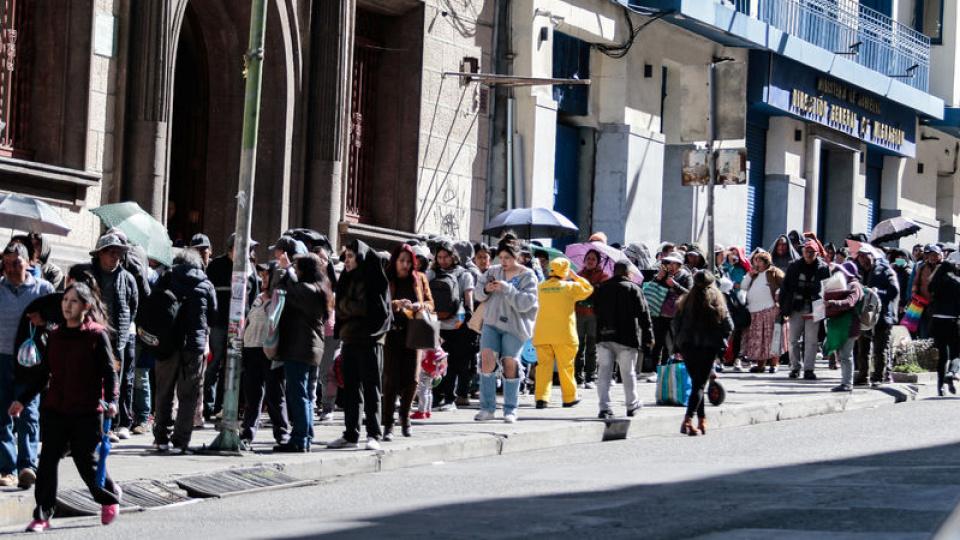
Following the protests that have been going on for about 50 days in Bolivia and brought the country’s economy to a halt, the crisis has moved to a new dimension.
President Rodrigo Paz declared a state of emergency (OHAL) throughout the country in his address to the nation. The decision gives the army the authority to intervene on a large scale in order to remove the barricades and restore order.
The declaration of a state of emergency came just hours after President Paz announced the agreement reached on Friday with the Confederation of Bolivian Labor (COB), the country’s largest labor union, in an attempt to reduce tensions. Despite the agreement reached with the union, the government activated the military option as the anger on the streets did not subside.
Behind the scenes of the crisis: The removal of fuel subsidies and IMF negotiations
The process that dragged the country into chaos began with the Rodrigo Paz administration’s sudden decision to abolish fuel subsidies that had been in effect for a long time in order to close the budget deficit.
This decision, taken in the shadow of the deepening dollar shortage in the country and the negotiations with the International Monetary Fund (IMF), led to a social explosion.
Although the government later stepped back and tried to stabilize fuel prices and canceled the controversial land reforms, the protests turned into widespread anti-government sentiment. Unions and prosecutors are no longer just about economic recovery; It demands wage increases, a permanent solution to fuel and foreign exchange shortages, and the resignation of President Rodrigo Paz.
Supporters of former leader Morales blocked the roads
Protesters, including groups loyal to former leftist President Evo Morales, have blocked the country’s main arteries and strategic roads with barricades.
While thousands of trucks were stranded on the roads due to the blockade that lasted for days, the shipment of basic needs such as food, medicine and fuel to many regions, especially the capital La Paz, stopped completely.
