

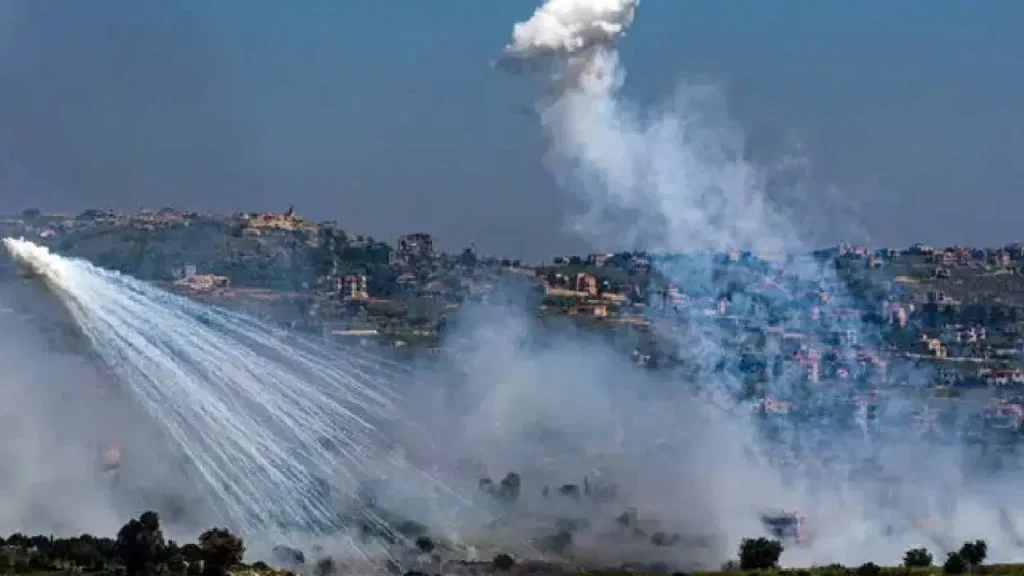
Allegations that Israel used white phosphorus bombs in Lebanon, where it continued its attacks despite the ceasefire, were further strengthened by visuals in the US media.
Visual collected evidence by the New York Times claimed that the Israeli army used white phosphorus bombs, an extremely harmful and flammable substance, in the densely populated areas of the country during the war on Lebanese territory.
It was claimed that the distinct smoke traces of the white phosphorus bomb were detected in social media images confirmed by NYT, which were last taken on May 30, in the city of Nabatiyeh, with a population of approximately 40 thousand, when the Israeli army captured the Beaufort Castle, an important structure in the region.
In the newspaper’s report, it was revealed that after the clashes between Israel and Hezbollah resumed in March, “white phosphorus was used near the coastal city of Sur, as well as 3 small towns called Al-Kuleyha, Khiyam and Yohmor.”
“White phosphorus spontaneously ignites when exposed to air and is extremely difficult to extinguish. White phosphorus, which is generally used by armies to start fires and create smoke screens during war, is not illegal in itself, but its intentional use against civilians or in an area where civilians live violates the international law of war,” the report said.
The news stated that questions were asked to Israel about the coordinates of the use of white phosphorus in 4 different regions of Lebanon, but no response was received, and it was noted that the images in question showed artillery shells exploding in the air in Lebanon and emitting streams of burning white phosphorus downwards, which was consistent with Israel’s previous use of American M825A1 bullets.
