



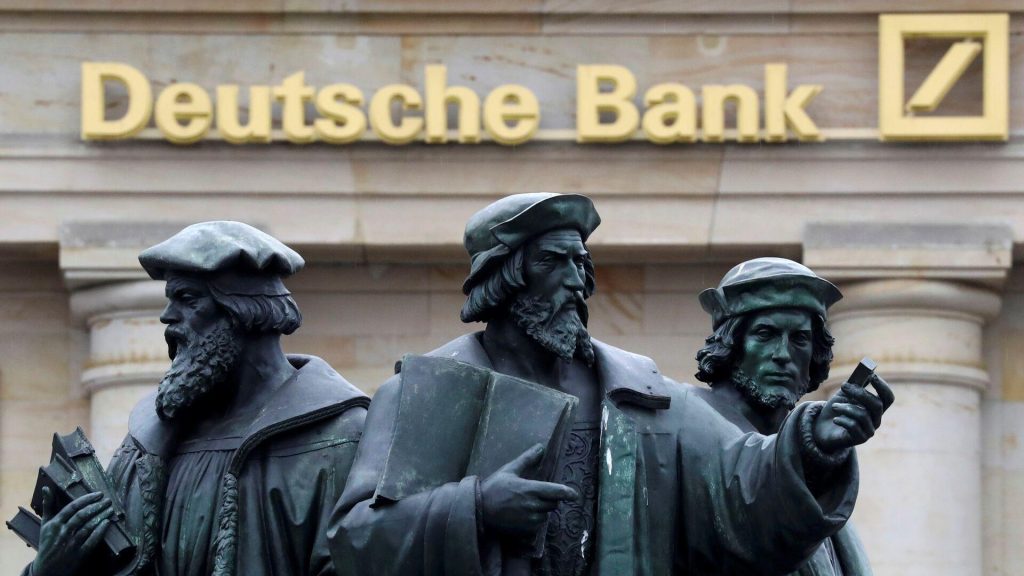
A spokesperson for Deutsche Bank acknowledged in a statement to the press that the bank made a mistake by accepting Jeffrey Epstein as a client.
“As has been repeatedly emphasized since 2020, our bank acknowledges that it made a mistake by accepting Jeffrey Epstein as a client in 2013,” the spokesperson said, referring to the institution’s past business relationship with the disgraced financier.
The bank stated that it contacted authorities immediately after Epstein’s arrest in July 2019 and fully cooperated with the subsequent investigation.
Strengthened Financial Crime Controls
The spokesperson noted that the bank has significantly strengthened its financial crime prevention mechanisms since the scandal came to light.
“Deutsche Bank addressed this matter systematically in consultation with regulatory authorities. Since then, significant investments have been made in training, controls, and operational processes, and financial crime compliance measures have been substantially tightened. We deeply regret this past business relationship and have learned from this mistake,” the statement read.
Previously, Deutsche Bank CEO Christian Sewing commented that the bank had drawn the necessary lessons from the episode, adding that “of course, this process also had personnel consequences,” in reference to internal dismissals.
Timeline of the Business Relationship
According to data shared by the bank, Epstein was added to Deutsche Bank’s client portfolio in August 2013. The relationship began to be terminated in December 2018 through a formal offboarding process.
Meanwhile, international media reports citing the “Epstein Files” published by the U.S. Department of Justice indicate that Epstein opened more than 40 accounts at Deutsche Bank and managed a significant portion of his wealth through the institution.
Call for Transparency
German media outlets also reported that Klaus Nieding, Deputy Chairman of the German Association for the Protection of Securities Owners (DSW), called on the bank to ensure full transparency regarding its dealings with Epstein.
Ahead of Deutsche Bank’s annual general meeting scheduled for May 28, 2026, Nieding stressed that all financial documents and details of the business relationship should be disclosed transparently.
“To prevent rumors from causing further damage to the bank’s reputation, these documents must be presented,” he stated.
Source: Sputnik