

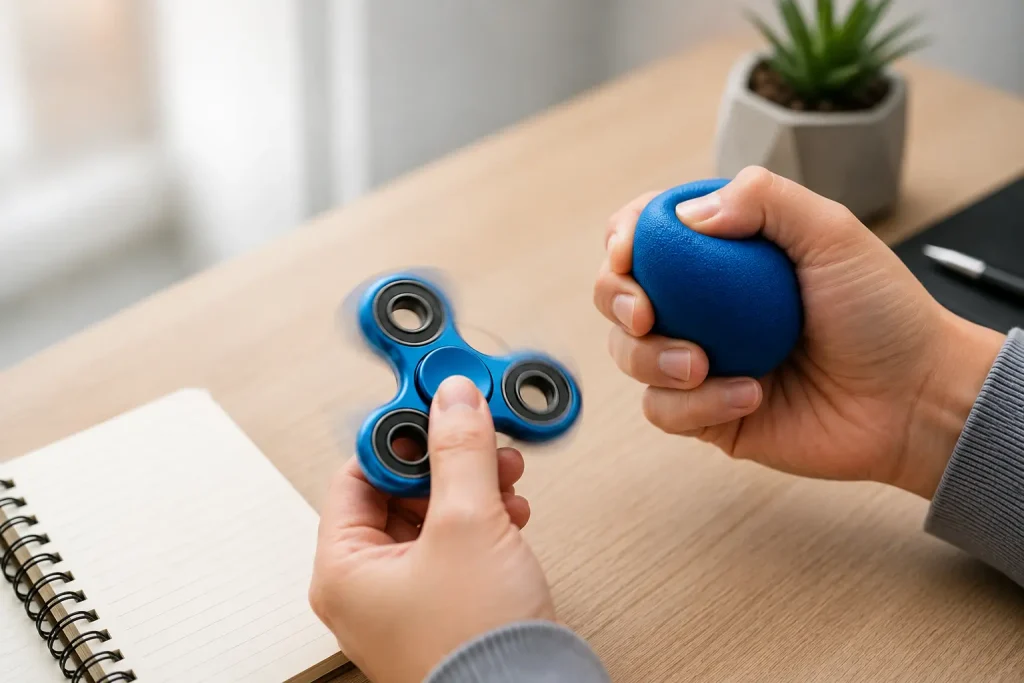
Do Stress Balls and Fidget Spinners Really Work?
Daily life can feel overwhelming. Work pressure, school stress, anxiety and constant mental overload can sometimes make it difficult to stay calm. In those moments, many people look for simple tools that can help them release tension and regain focus.
Stress balls and fidget spinners have become popular for this reason. They are small, easy to carry and can be used almost anywhere. But do stress balls and fidget spinners really reduce stress and anxiety?
The short answer is that they are not a cure. However, for some people, these tools may provide short-term relief, improve focus and support sensory regulation.
What Do Stress Balls and Fidget Spinners Do?
Stress balls and fidget spinners are simple sensory tools used by hand. Squeezing a stress ball or spinning a fidget spinner can give the mind a small physical activity to focus on.
This repeated movement may help shift attention away from stressful or anxious thoughts. It can also provide a controlled way to release nervous energy.
For some people, stress balls and fidget toys may help with:
Reducing tension during stressful moments
Redirecting anxious thoughts
Improving focus and concentration
Managing restlessness
Supporting self-regulation in people with ADHD
Replacing habits such as nail biting, skin picking or hair pulling
Can They Reduce Anxiety?
Stress balls and fidget spinners do not eliminate anxiety completely. However, they may help some people feel calmer for a short period of time.
The reason is simple: these tools give the body something repetitive and predictable to do. When the hand is busy with a steady movement, the mind may find it easier to move away from anxious thoughts.
Squeezing a stress ball, for example, creates a rhythmic motion. For some people, this can feel calming in a similar way to breathing exercises or grounding techniques.
Still, it is important to remember that these products do not treat the root cause of anxiety. If anxiety is intense, long-lasting or affecting daily life, professional support may be necessary.
They May Help With Grounding
Grounding is a technique that helps bring attention back to the present moment. Stress balls and fidget spinners can work as simple grounding tools.
For example, a person may focus on the texture, shape or pressure of a stress ball during an anxious moment. This can help the brain reconnect with the present instead of staying trapped in worries about the past or future.
This is why these tools may be useful during short periods of stress, tension or emotional overload.
Can They Improve Focus?
Some people need to keep their hands busy while working, studying or listening. In these cases, fidget tools may support focus instead of distracting from it.
This can be especially helpful for some people with ADHD. Small, repetitive hand movements may help channel excess energy in a more controlled way. As a result, the person may feel more mentally organized and focused.
However, fidget tools do not work the same way for everyone. For some people, a fidget spinner may become distracting rather than helpful. The best option is usually found through personal trial and experience.
Are They Safe for Everyone?
Stress balls and fidget spinners are generally safe. However, they should still be used carefully.
Small toys or products with detachable parts may be unsafe for young children because of choking risks. In schools, offices or meetings, noisy or visually distracting fidget tools may also disturb other people.
Some individuals may even feel more overstimulated when using these products. This is especially possible for people who are sensitive to certain textures, sounds or repetitive movements.
For this reason, it is better to choose a quiet, comfortable and safe product that matches the person’s needs.
Which One Should You Choose?
There is no single answer to whether a stress ball or a fidget spinner is better. It depends on the person.
People who benefit from pressure may prefer a firm stress ball or therapy putty. Those who need a quiet and discreet option may prefer a small sensory ring, textured object or silent fidget spinner.
For children or people with higher sensory needs, safe and durable products without small detachable parts are usually a better choice.
Final Thoughts
Stress balls and fidget spinners are not miracle solutions for stress or anxiety. They should not be seen as a replacement for therapy, medical care or long-term stress management.
However, when used correctly, they may offer short-term relief, help with focus and support emotional self-regulation.
They may work best when combined with breathing exercises, mindfulness, healthy sleep, regular movement and professional support when needed.
In short, stress balls and fidget spinners are practical tools worth trying. But if stress or anxiety becomes persistent and starts affecting daily life, getting help from a qualified professional is the healthiest step.
