




In recent weeks, consecutive political statements, diplomatic reactions, and new developments on the ground in the Middle East have indicated that the region is entering a renewed and increasingly hardened security climate. Regional war warnings issued by Iran’s leader Ali Khamenei and Israel’s moves to expand its administrative and political authority in the West Bank converge on the same geopolitical landscape. Reactions from the Arab and Islamic world further demonstrate that these developments are not merely a local crisis but have evolved into a broader regional fault line of tension.
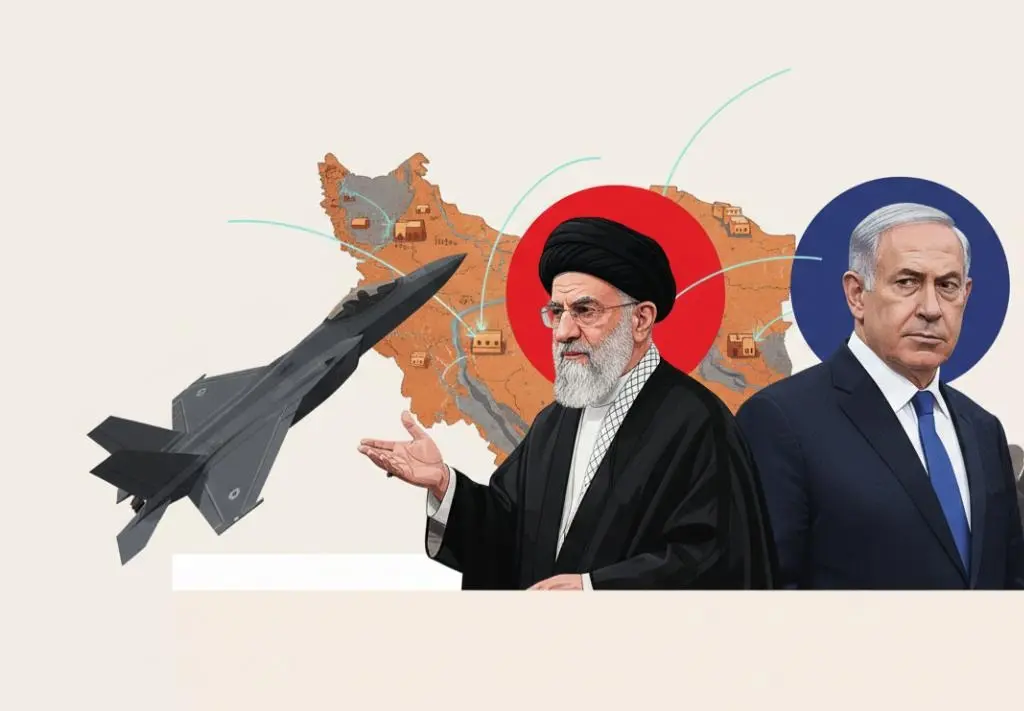
Iran’s Call for Internal Unity and Regional War Warning
One of the most striking elements of Khamenei’s recent speeches has been the strong emphasis on internal unity alongside the highlighting of external threats. The Iranian leadership has long pointed to the possibility that regional conflicts could escalate. However, the language used this time reflects a more cautious defensive reflex. Economic pressure caused by sanctions, domestic social tensions, and perceptions of military pressure in the region have hardened Tehran’s rhetoric while simultaneously underscoring the need for internal consolidation.
This discourse should not be viewed solely as an ideological mobilization tool. From Iran’s perspective, the possibility of a regional war is directly linked not only to tensions with Israel but also to the U.S. military presence, the security balance in the Gulf, and competition conducted through proxy actors. Khamenei’s speech can be read as a version of this broader security framework translated for the domestic audience.
New Steps in the West Bank and Israel’s Strategic Calculations
During the same period, Israel’s steps to expand administrative authority in the West Bank have triggered serious criticism at both international and regional levels. Some Arab states interpret these measures as an attempt to expand de facto sovereignty. It is clear that the changes in the West Bank are not merely a local administrative adjustment. These moves represent a structural transformation that directly affects the future of the Palestinian issue. In particular, the institutionalization of settlement policies further complicates debates surrounding the two-state solution. The rise of security-oriented rhetoric and coalition dynamics within Israeli domestic politics is also seen as one of the driving forces behind these steps.
Arab Reactions and the Limits of Regional Diplomacy
Statements from Arab and Islamic countries reflect an effort to establish a common diplomatic language against Israel’s policy in the West Bank. However, the capacity of these reactions to produce practical outcomes remains limited. In recent years, normalization processes between some Arab countries and Israel have emerged as a factor that weakens the impact of collective responses.
Nevertheless, the West Bank issue continues to hold strong symbolic and political significance in Arab public opinion. Even when states act cautiously at the diplomatic level, societal reactions can narrow governments’ room for maneuver. Therefore, these statements function not only as foreign policy messages but also as attempts to maintain a balance with domestic audiences.
Different Faces of the Same Crisis
At first glance, Iran’s war warnings and developments in the West Bank may appear to be unrelated issues. Yet both reveal the fragility of the Middle East’s security architecture. Israel’s actions on the ground increase threat perceptions among regional actors, while Iran’s hardened rhetoric emerges as a political response to this perception of threat. The reactions of the Arab world can be interpreted as an attempt to produce diplomacy caught between these two dynamics.
States in the region are now compelled to account not only for military power but also for public pressure, economic vulnerabilities, and global power balances. As a result, the emerging crisis presents a far more complex structure than a traditional interstate conflict.
Conclusion
Recent developments in the Middle East once again demonstrate that regional tensions are not independent of one another. Iran’s security discourse, Israel’s steps in the West Bank, and the diplomatic reactions of the Arab world are all components of the same strategic picture. It may be too early to claim that the region is heading toward a new major war. However, it is clear that a period marked by hardened security language, a narrowing diplomatic space, and deepening mutual distrust has begun. This landscape suggests that Middle Eastern politics in the coming period will follow a more fragile and increasingly unpredictable trajectory.
References
[1] “Khamenei warned of a regional war and called for internal unity.” Asharq Al-Awsat Turkish, February 9, 2026. Accessed February 9, 2026.
[2] “Arab states criticise Israel as it expands powers in occupied West Bank.” Reuters, February 9, 2026. Accessed February 9, 2026.
[3] “The Arab and Islamic world rejects Israel’s attempt to establish sovereignty over the West Bank.” Asharq Al-Awsat Turkish, February 9, 2026. Accessed February 9, 2026.
